Thanks to a technical glitch (there's a reason for the name of this occasional blog) the irregular newsletter where I send out details of new releases, book signings, and the odd piece of publishing news, has died.
It is no more.
It has ceased to be.
But unlike the infamous Norwegian Blue it is being resurrected.
If you'd like to sign up, and I hope many of you will, please follow the link here
Wednesday, 29 August 2018


Monday, 5 February 2018
Shadows on the grass - Misha Herwin

“Shadows on the Grass” came out as an e-book in January and after the first flurry of excitement, there’s time now to sit back and reflect on the whole process.
This book has taken many, many years to write. Not
because I am a slow writer, quite the opposite in fact, but because it started
out life in a very different form.
Back in the day I was interested in writing historical
novels, I was also, at more or less the same time, researching my family history.
My parents came to England after WW2 and settled in a
country that was totally foreign to them. Because at that time Poland was
behind the Iron Curtain they had very little contact with any of their
relatives and neither did we. Curious to know more I began asking questions and
listening to the stories my mother told about her childhood.
Some of this material was incorporated in the original
version of “Shadows on the Grass” a long shambling novel that had no real
centre, or any particular theme. I remember finishing it one snowy December day
and rewarding myself with a glass of vodka, then putting the manuscript away in
the box along with all the research I had done on Polish history.
Of course what I should have done was to get feedback
and start on the next draft, but somehow I had lost impetus. Life got in the
way and it wasn’t until some years later that I took it out again, decided
there was something in what I had written and decided to give it another go.
The first thing that went was the structure. Instead
of following a chronological narrative, I went for a series of flash backs so
that the story of the Dzierzanowski
family would be told through the view point of three main characters.
Grandmother, mother and daughter. And so a theme emerged, the relationship
between the three of them became the focus of the book.
In nineteen sixties Bristol seventeen year old Kate is
torn between the new sexual freedom and her rigid Catholic upbringing. Her
parents have high expectations of her; she however is determined to lead her
own life.
Mimi her grandmother is dying. In her final hours, her
cousin the princess keeps watch at her bedside.
Born in the same month in the same year, the two women are bound by
their past and a terrible betrayal.
Meanwhile, caught between the generations, Hannah
Mimi’s daughter struggles to come to come to terms with her relationship with
her mother and to keep the peace between her daughter and her husband.
She too must find her own way in this foreign land in
a new post war world, where the old certainties have gone and everything she
knows has been swept away.
Thanks Steve for hosting me on your blog. If you would like a copy of “Shadows on the Grass” here’s the Amazon LINK
Wednesday, 24 January 2018
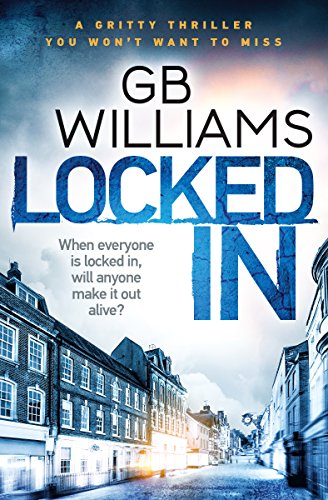
Creating a book - GB Williams
Creating a Book
Writing is an odd thing. Most people think it’s a solitary activity, but is it really?
It does, at first glance look that way, and writers do spend a lot of time working alone. At least I do. Our distinguished host on this blog, Steve Lockley spends a fair amount of his time working with others, Paul Lewis and Steve Savile to name but two. Such collaboration is actually rare - at least, in comparison to the number of writers who write alone.
Writing is a process that starts with a story idea, usually in one person’s head. It usually involves a computer somewhere along the line where one person sits and types. Then an editor, probably also sitting alone with a computer somewhere, rips it up and sends back to the writer telling them all the things that are wrong with it. After that, there are tears and wine and rewrites. Then more rewrites. Funny that the re-writing feels like it takes so much longer than the initial writing. Then there’s copy editing and proofreading still to do before publication.
A writer can write, but no book should ever get into the hands of a reader without the work and effort of an editor. Have to say I don’t think my stuff would ever have been published without the hard work my editor puts in, the slaps around the head for the bad stuff and the sharper ones telling me to see that there are good bits too.
Then there’s the cover. All books need a cover, even those that will never be printed. Like it or not the cover will help or hinder the book being sold. It’s a creative element that needs to be right; people do judge a book by its cover. It is very unusual that the writer actually designs the cover, that’s usually the province of a very different kind of creative. I’ve sent out briefs for cover designs and had a couple where I’ve wondered how the result in any way related to what I wrote, where they really don’t relate, then I ask for changes to be made. I’m happy with the covers my name is on.
Working with a publisher also helps with that too. They have their own processes for creating a book, content and cover. Then they do the marketing too. Many an author does the whole kit and caboodle of marketing themselves, I don’t because that’s not the way my brain works, but even I know I have to put the effort into selling, and that certainly takes more than one buyer. Selling needs a seller and a buyer at least, and for an author to be considered a success, the author needs lots of buyers.
Funny then, that even after all that, the creative process still isn’t over. Just because the book has been written and published, it doesn’t mean the creative process is finished. Whatever a writer puts on the page, the reader still has to create what they see in their own mind. One person’s sky blue may be cerulean, the next might be azure. It will depend on what they get from the words they read. It will depend on their perception
The character I write, will not be the character you read, and won’t be the character your best friend sees either. We all have our own realities and we will each see different things even in the same set of words. My reality and yours aren’t the same thing. But none of those realities are wrong. The worlds we create are ours and ours alone, they are precious and they are perfect and we each should strive to create them over and over again.
So the creative process never really ends because it begins all over again with every new reader, and even every new read, as the reader picks up on the nuances unseen on the first run through.
Every writer sows the seed of a new story, a new world. I’ve planted a few seeds now, why don’t you go see if you want to bring them to life.
Twitter: @GailBWilliams
Facebook: @GBWilliamsCrimeWriter
Blog: https://thewriteroute.wordpress.com/
Website: https://www.gailbwilliams.com
AVAILABLE NOW

Thursday, 18 January 2018
Story Challenge 2018 #1
When I first started writing and submitting fiction, more than thirty-five years ago, I was only interested in short stories. I tried my hand at a novel, but after writing 10k words (on a manual typewriter) I lost all faith in it and tore it up, frustrated that I could have written a couple of stories in that time. If I'd continued I might have ended up with a novel that would never have seen the light of day as opposed to 20 stories and the hope that at least some of them would have found publication. It's impossible to make a living out of writing short stories, but back then that wasn't the aim; all I wanted was to get some publication credits.
I've written SF, horror, fantasy, crime, Sherlock Holmes tales, Doctor Who stories, and fiction tied to games. There was a time when I was regularly receiving invitations to submit to anthologies and the list of credits grew longer.
Somewhere along the way I started writing longer stuff and took the plunge to give up a day job I was no longer enjoying. I was producing stuff under my own name, in collaboration with others, and as a ghostwriter, but the short stories came along far less frequently. Last year, the only short story I had published was a story that had originally appeared in my collection Always a Dancer & other stories (Fox Spirit 2016). There was plenty of longer stuff, even though my own name didn't appear on much of it, but no new short stories.
This year, things are going to change.
I've challenged myself to write and submit at least one story every month in addition to the other work I already have lined up (and there's plenty of that). I have no intention of writing these stories for nothing, but I'm happy to write for markets that pay at least a token payment plus contributor's print copy if there's a theme that grabs me. If I am fortunate to place any of these stories I'll buy a new piece of art for my office, if I'm not I'll doodle something on a postcard and stick it up on the wall just to remind myself.
I already have a few deadlines pencilled into my diary for anthologies that I'd like to submit to, and if there are any editors who are working on projects this year and would like me to try my hand at something please get in touch.
So why am I telling you this? Well I figured that if I wrote my plan down I would be more likely to stick to it. It would be great if I reached the end of the year in which I celebrate my 60th birthday with enough stories to fill a new collection, even better if some of them had already found homes! I'll try to leave a monthly update to keep you up to date wit how I'm doing.
Sunday, 10 December 2017
A relationship with an Old Lady - Willie Meikle
As promised, here's the first of the guest posts coming to you over the next few months. Here Willie Meikle gets the chance to talk about the place that inspired his latest short story collection, The Ghost Club.
A RELATIONSHIP WITH AN OLD LADY
I went to London to seek my fortune, or rather, to follow a woman, back in early 1982. My relationship with the Old Lady proved to be the healthier one of the two, a love affair that I still carry with me even though it lasted less than ten years.
For the first few months I was living and working outside the main city while making forays into the museums, cinemas and pubs of the city center at weekends. But the love only came after I started working in the old city itself. I got a job in a converted warehouse in Devonshire Square near Liverpool Street Railway Station. My desk looked out over Petticoat Lane Market, my lunchtime wanderings took me to the curry cafes of Brick Lane and the bars of Whitechapel in the footsteps of the Ripper. I was supporting computer systems down in the financial sector, and my wanderings down there took me to Bank and Monument, to indoor markets and gorgeous old pubs, to tiny churches and cemeteries hidden away in courtyards, and across the river, to Borough Market and even older pubs, like The George and The Market Porter. If you're after a true whiff of old London, there's few finer places to seek it.
A few years later we moved office to Farringdon Road and more old markets, Guardian journalists in the pubs and forays into the area between there and Euston. Then we settled in High Holborn which for me meant Skoob Bookshop, the British Museum and yes, more pubs, in the Victorian splendor of The Princess Louise, the high gothic weirdness of The City of Yorke and many more, including forays down to Fleet Street for some Dickensian musings in Ye Olde Cheshire Cheese, the Strand for The George and the Coal Hole under The Savoy for some slices of theatrical history, and many other bars, too numerous to mention or too lost to memory in alcoholic poisoning of the brain cells.
For a while London got into my soul. I got able to find my way around from just about anywhere inside the M25, I lived south of the river in Bromley, Beckenham and Ladywell, where I discovered that the flat I'd bought didn't just have a bogeyman in the stairwell, but that the Old Lady's Well bubbled up in the cellar, to my eventual enormous financial cost, But at least I got to know the similarly drunken patrons of a variety of night buses after concerts or drinking sessions during my time there.
London is indeed a fine old city. Almost, but not quite, the equal of Edinburgh or Glasgow in my heart. My real love for it came from not just the place, but from the people I met there. I met many Londoners, but I also met people from all over the UK, people from India, Pakistan, Jamaica, Hong Kong, Poland, Greece, Turkey and many other far flung spots. I made great friends and a lot of them are still friends today, 35 years on. We spent many happy hours in those aforementioned old bars, telling each other stories. They heard mine, and I heard theirs, and the telling of them bound, and binds us in friendship all across the globe to this day. That's been better than any fortune to me over the years.
Towards the end of my time in the Old Lady, I met my wife there too, in another of the old bars, and our courtship was spent over beer, curries, film and theatre around Covent Garden and in the West End.
We left London for Scotland in 1991, but the Old Lady came with me, in my friends and, eventually, in my own writing. When I started to drift into writing Victoriana, it was London that called loudest to me, from Baker Street and Cheyne Walk, from Whitechapel to Embankment and yes, from bar to bar, Charringtons IPA, Fullers London Pride, Young's Special and all.
In my newest collection, THE GHOST CLUB, most of the stories don't take place in London. But they are all told there, over a meal and a drink, by Doyle and Stoker, Stevenson and Oliphant, Tolstoy and Wilde and others, all drawn, like me, by the tales to be told, and heard, in the arms of the Old Lady.
THE GHOST CLUB, a new collection of supernatural stories, is out from me at Crystal Lake Publishing in paperback and ebook on 8th December.

It's a tad ambitious, and might fall flat on its face, but given my love for the city, the era and the storytellers who lived in it, writing a story as if written by each of them is something I had to try.
It's a simple premise.
In Victorian London, a select group of writers, led by Arthur Conan Doyle, Bram Stoker and Henry James held an informal dining club, the price of entry to which was the telling of a story by each invited guest.
These are their stories, containing tales of revenant loved ones, lost cities, weird science, spectral appearances and mysteries in the fog of the old city, all told by some of the foremost writers of the day. In here you'll find Verne and Wells, Tolstoy and Checkov, Stevenson and Oliphant, Kipling, Twain, Haggard, Wilde and Blavatsky alongside their hosts.
Come, join us for dinner and a story.
Here's the TOC, which may have a different running order in the final book.
THE GHOST CLUB MEMBERS AND THEIR STORIES
Robert Louis Stevenson Wee Davie Makes a Friend
Rudyard Kipling The High Bungalow
Leo Tolstoy The Immortal Memory
Bram Stoker The House of the Dead
Mark Twain Once a Jackass
Herbert George Wells Farside
Margaret Oliphant To the Manor Born
Oscar Wilde The Angry Ghost
Henry Rider Haggard The Black Ziggurat
Helena P Blavatsky Born of Ether
Henry James The Scrimshaw Set
Anton Checkov At the Molenzki Junction
Jules Verne To the Moon and Beyond
Arthur Conan Doyle The Curious Affair on the Embankment
You can order a copy here.
Saturday, 9 December 2017
Let's get this show back on the road!
Yeah, yeah, I know I've said this before, but this time it's really going to happen. I'm not promising that I'll be making updates every day, but they'll certainly be more frequent that once every year or so. I have no excuses beyond the pressure of work, and while there's no guarantee that the load will get any lighter, I'll be making sure that I find time to provide some kind of update.
So why am I doing this? Well, there are still plenty of people stopping by to read the previous posts and the least I can do is provide a little more for those who keep coming back hoping for more.
For the next few weeks I'll be trying to bring everyone up to speed with the stuff I've been up to for the last couple of years and talk about a few of the projects I have lined up for 2018 - it's already looking like it's going to be a busy one. There are a couple of things in there that I can't talk about yet, but it's all good
I'll be posting a few thoughts on various aspects of building a writing career including things like writing without payment and royalty only anthologies. I have no intentions of giving writing advice - there are plenty of others out there that have something to say - but I'm happy to talk about my own experiences.
I have some guest posts lined up for the next few months but this time I've invited a few people from outside the Fantasy/SF/Horror community. If you're interested in a guest slot, I'd love to hear from you.
Kicking things off will be the fabulous Willie Meikle. Willie and I started off writing for the small press far too many years ago and somehow we've both managed to keep plugging away. His new collection of short fiction looks rather special but more of that soon enough.
So if you're a writer and would like a slot to talk about the way you work, or to vent your spleen at some aspect of the publishing industry, get in touch. Hope to hear from you!
Tuesday, 24 June 2014
I'm Back!
Has it really been almost three years since I last posted anything on here? I seem to have lurched from one project to the next with barely the chance to catch my breath. The thought was always there to come back and give an update but work has got in the way!
So what's been happening since I was last on here?
Well there have been a handful of new short stories, at least three short novels as well as a full length one (and a couple of novels I have ghost written but can't talk about). I've set up a page listing my published work and while there are no links to buy any of them yet I hope it won't be too long before I find the time to do it
The full length novel is 'The Sign of Glaaki', a novel based on Fantasy Flight Games' Arkham Horror game. Murder, mayhem, monsters, Harry Houdini and a young Dennis Wheatley. What more could you ask for?
The first of the short novels was 'Solomon's Seal' co-written with Steven Savile and featuring some of the characters from his best selling novel 'Silver'. The only monster in this one is very much the human kind.
Somehow Steve and I also managed to fit in a couple of short novels featuring our character Jack Stone who first appeared in the story Jack Be Nimble. This story was later renamed 'Northern Fire' for too many reasons to bore anyone with and is available as an ebook. The two short novels 'Northern Grit' and 'Northern Soul' follow Jack's exploits as he tries to rebuild his life back home in the North of England. They are only available as ebooks at the moment but there is the prospect of a paperback bringing together all three of the stories. I'll be sure to post on here as soon as I know more
There's plenty of other stuff on the horizon but if I try to talk about everything at once I won't even get this post published.
I promise to be back before too long!
Sunday, 21 August 2011
It's only me!

Well now that my two months of guest bloggers has come to an end, the usual routine of irregular updates from me will resume. Having said that, if anyone is looking for a place to talk about their latest work this space can be made available.

 So what has been happening since my last update? Well Steve Savile and I have finally completed Deadlines the third of our Sally Reardon Supernatural Mysteries, which started with Of Time and Dust, and it's now available for the kindle. Other devices exist I'm assured, but there is a very good reason for the name of this blog! This one is twice the length of the previous two stories but we've decided to hold the price at the same level as the others for the first month at least, so I hope that those who enjoyed the first couple of stories rush out and buy it. We've also taken the opportunity to have revamped covers done by the fabulously talented Stan Tremblay. Stan has made an appearance on this blog and I'm sure you'll agree that he does some great work. Deadlines (The Sally Reardon Supernatural Mysteries) in the US or here in the UK
 so if you are there please come up and say hello - you won't even have to buy me a beer unless you really want to. I'm not scheduled to appear on any panels as of yet but a couple of books are being launched over the weekend with my stories in. Full Fathom Forty, an anthology to celebrate 40 years of the British Fantasy Society, contains a reprint of 'Honour Before Glory' which first appeared in Chronicles of the Holy Grail. This time I'm not planning on sitting at the the end of the table during the signing session if I can help it. Last time I did that there was no space left on the page for me and I was signing at all kinds of weird angles!

 Also being launched that weekend is the new Alt-Dead anthology edited by Peter Mark May. This contains a new Winter Zombie story written in collaboration with Mr Savile. This tale is set in the same world as our story 'Snowbound' which appeared in Guy N Smith's Graveyard Rendezvous 37. There's a third story in the sequence due to appear in a Phobias anthology before the end of the year - more on that when I have it. We've already got ideas for another couple of stories in the sequence, so if any small press publishers out there are interesting in having a chat about doing a collection of them, get in touch.
Djinn, the first part of a series of vampire novellas again with Steve Savile, is now into a second draft. A couple of publishers have expressed an interest in taking a look at this so keep everything crossed for us.
As usual there are a couple of other projects on the go which I can't really talk about yet, partly because of contractual reasons and partly because I don't want to jinx them. I'm quite excited about all of them though. More news soon I hope.
Sunday, 31 July 2011
Open House Day 61 - Sandy Auden
Talking Heads
It's fun being a freelance writer, but it isn't always easy. Like all jobs, a freelancer is faced with a range of challenges to overcome in their day-to-day business and for Steve's blog, I wanted to share a few tips on my favourite aspect of the job: interviewing.
I've lost count how many interviews I've done over the last decade or so but I've certainly chatted to hundreds of authors; several actors; and handful of directors and props crew; and one lovely Canadian Visual Effects Supervisor. And all of them have been different.
Each interview has delighted or surprised me in some way with an interesting point of creativity or personal background or opinion. We're all multi-layered characters, diverse in so many ways and yet also very, very similar. No two writers develop their stories in the same way, yet they all share the same passion to write their adventures down and take others along on the ride with them. The ideas writers have could be about any topic on earth but all of them report that they have ideas coming up almost all the time. And many writers agree that often their ideas arrive when water is involved (like in a shower), or when they're driving (which probably has something to do with the conscious mind being occupied while the sub-conscious is chugging away generating stuff I expect).
Sharing an interviewee's experiences with others in an article can be very satisfying and here's a few pointers to help you get the quotes you need…
Preparation is key
A good interview starts a long time before you get to face to face (or email to email).
Who Are They?
Always do your research about your candidate and their work. Yes, you can walk in and blag it but the best interviews come from knowing your interviewee's background.
What To Ask?
Get your questions ready in advance, always have more questions than you think you'll need and keep them open questions as much as possible (ones that can't be answered with a yes or no).
When building your question list, curiosity is an important trait. Ask about what you're interested in because that's probably what other people want to know too. Having a theme for your interview will help provoke questions out of your head, but I always find this part of the preparation works like any other creative task in that the sub-conscious will work on them in the background until its ready to share. Keep pen and paper with you at all times because you don't know when those questions will arrive – you could be on the toilet, driving, waiting to tee off on the first hole, on a particularly boring training course or in the middle of a movie. If you don't get them on paper straight away you'll probably not be able to remember them all at a later time and lose out on some really good questions.
Face To Face At Last
These days there are all kinds of ways to do an interview – email, phone, skype, in person, or instant messaging – but some tips apply regardless of the medium used.
Listen, React and Go With the Flow
One of the most well known tips is to listen to your interviewee and react to their answers. If you're asking what they remember about their last night with their partner and they suddenly drop in the surprise confession, "just before bed, I sunk an axe into her head" then don't doggedly follow your original line of questions, ok?
In The Blink Of An Eye
There will be times when you aren't going to get very long to do an interview. The shortest one I've ever done is eight minutes and forty two seconds (according to the dictaphone). In these situations good preparation will pay off and make the difference between getting juicy answers or vague quotes.
Not Answering the Question
There's two scenarios here. First up, the interviewee does not want to answer your question and how you deal with that is up to your own requirements. If you need the outrageous or sensational quote or want to dish the dirt that's being withheld, then you'll need to find a way to wheedle it out of the interviewee. Personally, I respect their boundaries and find that way I get a lot of repeat interviews when future projects arrive.
The second situation is that the interviewee answers the question they think you have asked. This happens most often with frequently interviewed candidates who are expecting a standard question when you ask something similar but with an extra twist. Observation is essential here and it ties in with listening to the interviewee and your preparation. It's far easier to listen to your interviewee (and spot the misleading answer) if you know your questions and article theme well.
Location, location, location
Environment is also essential for both you and your interviewee. If you can find a quiet place to talk, then all the better. However, there can still be some distractions. I once took an interviewee out on the hotel stairs (between floors) to sit down for a quiet chat. What we didn't expect was that the hotel's head waiter would be up and down those same stairs like a demented hamster. Maintaining focus on what you're talking about can be tough for both of you with someone else running past shouting "Sorry!" every two minutes.
Keep Calm and Carry On
This single skill has got me through several difficult interviews. One interviewee opened our session with, "I doubt you can ask me anything that I haven't been asked before". There's nothing quite like being judged as unoriginal before you start but instead of taking offense I just acknowledged the comment and cracked on politely. At the end of that interview, they did concede that I'd come up with a new angle on their work. For another interviewee, I explained the theme of the article up front, to be told that it "was a crap theme". At yet another, the interviewee repeatedly told me I was barking up the wrong tree and took considerable delight in trying to sabotage my questions.
But I respected their opinions and did the interview anyway.
There is, of course, a limit. When you ask someone if they want coverage on their latest project and they get angry, start shouting and being generally abusive - walk away politely. They're probably just having a bad day and there's always the next time (they were and there was).
Getting It Down On Paper After A Face To Face
The last aspect I want to cover is transcription, a big part of the process when you're interviewing in person. I've always found transcribing very time consuming and a bit of a grind to be honest but there are a couple of ways to make the task a little easier on yourself.
Background Noises
Quite a few years ago, I did an interview over lunch in a Pizza Hut. Yes, I expected background people noise but what I hadn't realised was that Pizza Hut actually ran a constant muzak track in their restaurants. It was so innocuous that you didn't consciously register it when you were there, but the dictaphone picked it up in glorious clarity and its irritating presence made the transcription all that much harder.
That day, the dictaphone also managed to pick up something else unexpected – the low key bitchy argument taking place between the couple at the next table. With three levels of background noise to cope with (general talking, argument and muzak), it took a long time to transcribe that interview.
So as you can see, sitting around having a nice little chat with someone for an article may not be as easy as it looks but it is damn good fun and I've been lucky to talk to some very talented and creative people in the last ten years or so. Using the tips above, you should get some usable quotes for your article then all you've got to do is write it and that is a topic for another day…
Sandy Auden is a freelance writer with SFX magazine, Interzone magazine and SFSite.com. She loves sunsets, walking on the beach and talking to people.
Thursday, 28 July 2011
Open House Day 59 - Sam Stone
The Changing Face of the Science Fiction and Fantasy Series
Science Fiction and Fantasy Series’ have been popular for as long as I can remember. I’ve been a huge fan of science fiction on television since I first began watching Star Trek in the mid-seventies. This was rapidly followed by shows like Blake’s 7, The Tomorrow People and The Prisoner. In latter years, through the power of DVD, I have discovered classic Doctor Who and also Lost In Space. Revisiting these old series’ I became aware of the dramatic change of pace and plot lines over the years. The humble ‘television series’ has evolved, becoming something far different from its predecessors and in order to illustrate this I’ve chosen a few old and new series’ to briefly discuss the changing face of Science Fiction and Fantasy on television and its evolution into the mode of ‘serial’.
I’ve never really thought of Star Trek: The Next Generation as Star Trek. The original series had some great characters and the stories and special effects, sets and formula still hold up today. I think this is because Star Trek is easy viewing. You don’t need to have followed the entire series to enjoy watching any single episode and because the characters don’t carry emotional baggage from one story to another, the series can be viewed in any order. Each episode is an individual adventure. They are fun, the characters’ relationships are established by their behaviour to each other (we are ‘shown’ what they are like in every episode) and the best bit of all – there is very little angst. I have to marvel at how good the set and effects were for the day. With the exception of the very sixties hairdos it still stands the test of time. They did a lot with very little without the technology of CGI and it has been more than rumoured that some of the gadgets featured in the show have been the inspiration for the technology that we take for granted today.
I spent many years enjoying Next Generation, even though I feel it’s a different series entirely. Next Generation worked well for me because it introduced some new and interesting characters and the writing was generally good. It makes great use of CGI in many ways, but still had excellent sets, and the holo-deck was a marvellous invention that lends itself to some of the more interesting stories. This series mostly kept to the formula of one story per episode, and with the exception of some blossoming love relationships, it rarely lost its way by becoming subservient to its own history. Even so, is this series as accessible as the original series? I’m not so sure. And that might be because of the ever changing cast, a rare occurrence in Star Trek, and their equally evolving roles on board the Enterprise. Unlike Next Generation, Star Trek’s cast had a specific role and personalities which were maintained throughout the series.
The stories in Next Generation are far more complex than in Star Trek, perhaps to suit the modern audience, but this does again necessitate a regular audience who are following the series from start to finish. I recently watched one episode out of context and found the characterisation of Natasha Yar (Chief of Security aboard the Enterprise) hard to fathom. This seemingly tough character was kidnapped by a chieftain and admits to being ‘flattered’ by his interest in her. The character, I believe, would have killed him the first chance she got. Her actions in this situation weren’t believable. In Star Trek, however, we knew how all of the characters would behave in any given situation. Spock will always be logical, Kirk honourable, Bones, a caring doctor, will always try to get a rise out of Spock and the characters maintain these roles. They are always consistent. Ergo – Believable. This is perhaps a quality that has been sacrificed in some present day shows. The characters change to suit the story, not to react in the way that you would expect from your burgeoning knowledge of them.
Buffy the Vampire Slayer started life as a sequence of one-off episodes, and presented a set of fairly consistent characters that naturally evolved throughout the series. Each week there was a new demon, vampire or werewolf to slay and Buffy would literarily kick ass. We had humour that softened the impact of the violence, but by about season three you can begin to discern a change in the way the season’s storylines developed. A whole season became focused on one climactic event and within the stories that led to this conclusion we had the torturous anguish of the characters as they argued, loved, hated and ultimately worried their way through whatever incidental events made up the individual episode. Often regurgitating issues carried over from previous episodes, sometimes even from previous seasons. The angst was ramped up to exaggerated proportions.
Perhaps this was the start of the phenomena that has since swept American tele-fantasy? In some ways it is almost as though soap opera was brought to the genre and the two mingled and became indistinguishable except for the bizarre monsters and creatures that would inhabit a science fiction, fantasy or horror series. Buffy was able to get away with much more than the average series because it initially didn’t take itself too seriously. The humour lightened the mood – until season seven, which was by far the darkest. By then, however, the show lacked focus, starting with one ongoing storyline and ending with a completely different one. It also relied heavily on the viewer’s prior knowledge of the characters: thus alienating anyone who wanted to ‘try’ just one episode. A series these days, it seems, requires the viewer to buy into the whole season and not just one episode at a time; needing the audience to be dedicated to the ongoing story over and above whatever an individual episode might present. And more often than not, individual episodes contained nothing stand-alone, being just a small part of the whole season arc.
This is when a ‘series’ becomes a ‘serial’. The characters evolved and mostly they were believable – if you’d watched the whole series and understood their motivations that is. But if you hadn’t then some of their actions may seem a little unrealistic.
Recently I watched the entire run of the new Battlestar Galactica, which ran for five seasons. I remember the original series well, and was expecting some rollicking adventures through space, though maybe a bit more high tech. However I couldn’t recognise this series as a descendent of the original Battlestar Galactica. There were a few similarities in the use of names of characters, but the characterisations were completely different from the original. This isn’t necessarily a bad thing of course, but it is something of a cheat – and I felt the same about Next Generation. The fact is, Star Trek and Battlestar Galactica were hugely successful shows in their day and, with the modern preference for regurgitation rather than originality, their names were tagged onto something that had similarities but which were in fact entirely different stories, or as in Next Generation, a spin-off. Again, this wasn’t a bad thing. The series’ themselves were executed for the most part with fantastic efficiency. However there were flaws. There was an attempt to make the new series of Battlestar Galactica follow the old format, with individual stories, weaved into the overall story arc. Relationships were complex – and sometimes characters were not believable. For example the steady and strong commander suddenly, in the final season, turned into a drunk and had tantrums where he would throw paint around and smash glasses. Adama’s son, Apollo, betrayed his father, went against orders and at one time, piled on excessive weight because he was depressed. The most convincing character was that of Gaius Baltar, who was contradictory from the start and so anything he did seemed appropriate. It could be the curse of multiple writers somehow missing the point that caused some of these inconsistencies to occur. I watched the whole series and didn’t feel that there really was any reason why some of the characters acted in such a way that was ‘out of character’. The show was also steeped in religious and philosophical references – which I felt they managed to hold together effectively until the end, but the angst grew tiresome at times and the show appeared to be far more a soap opera than an adventure series at times.
Perhaps this is the curse of a long running series, that in order to maintain its audience, there is perceived to be a need to increase the angst and to decrease the standalone episodes. Battlestar Galactica did try to maintain the ‘one-story per episode’ theme but in later seasons this actually was to the detriment of the series. Often you saw one story end at a point where you wanted to know more, but the next episode had no bearing on the previous one and made no reference to it. The previous plot was therefore left hanging for an episode or more.
Supernatural is another long running series that has evolved. It worked better for me when the stories were individual adventures – even though there was a back story about the death of Sam and Dean’s mother and its connection to the death of Sam’s girlfriend via a yellow-eyed demon. I wanted to watch a programme that I could enjoy in any order like the original Star Trek. You didn’t really miss anything major if you skipped an episode here and there and watching was always fun. Around season three – you sense a theme developing here – the series became too self-aware and as a result it became less enjoyable to watch. It relied too much on events that had happened previously and the interplay and angst of the main characters rather than focusing on a current storyline. From season three onwards I would say that it would be difficult for a new audience to understand any of the previous references that were made.
Doctor Who does this too sometimes. It’s been said that the series was better when the stories were done on a weekly basis. But there has always been a variety of lengths of story, some were two episodes long, others eight – I think of them as more mini-series (even though technically they were one story told in half an hour slots). In recent years with the revival of the series by Russell T Davies, Doctor Who changed dramatically (mostly for the better). We had a surge of one-off adventures that would maybe stretch to two parts but no longer. The new audience could access the series easily and although there was a foregone conclusion that the Doctor had lived a long life there was very little ‘telling’ of this past. We just accepted that he and other characters knew about the Daleks, or the Cybermen. The reinvented series was given a loose back story, a warning of ‘Bad Wolf’ that gave this often fun romp through time and space an ominous quality that was brought together at the end of the season. Unfortunately though, this idea that a season has to have an arc, has resulted in more and more backstory becoming the fore-story. In the last two seasons, beginning with ‘Amy’s crack’ – initially used as a way to introduce a new character – then continuing with (and I’m not sure about this actually as I found the first half of the current season incredibly confusing) the ‘Doctor’s death’ being a focus of this current season. Every other story in the season so far has made some reference to this event, and tentatively hangs around it. But why does there need to be an arc at all? Why can’t all the adventures be stand-alone without them all joining up in some wider jigsaw puzzle which only the truly dedicated will appreciate? My favourite episodes have been the standalones – Blink is the obvious one to come to mind. For all that, Doctor Who has changed for the better in many ways. The stories are more grown up (sometimes a bit too much so), have more complex plots, and have even greater, scarier monsters.
Science fiction and fantasy on television continues to evolve. This ever-changing formula is reactive. The writers, producers and networks are all looking for the next big thing, even when they hang it onto a previously successful series and call it by the same name. It doesn’t make it the same series and in fact it is often something similar or a spin-off. It still feels to me that there is too much angst used to hook the viewer, when I’d prefer more adventure, but I think this is deliberately aimed at gathering long-term audiences that will watch the series to the bitter end if they engage enough with the characters. Perhaps this is akin to the way that people relate to soap characters, and is introduced for the same reasons. This also tends to mean that the characters can be warped to suit the mood of audience, or the plot, unlike the series of old which gave you consistency of a character’s personality, and adversity only brought out those traits, rather than resulting in them behaving in a way that is alien to the character you’ve grown to understand. The old ways aren’t necessarily the best, but sometimes I feel we’re in danger of forgetting what drew us to the series in the first place: stand alone stories.
Sam's latest novel Hateful Heart can be ordered here
 BIOGRAPHY
Sam's writing has appeared in nine anthologies for poetry and prose. Her first novel was the fulfilment of a lifelong dream. Like all good authors she drew on her own knowledge and passions to write it. The novel won the Silver Award for Best Horror Novel in ForeWord Magazine's book of the year awards in 2007.
In September 2008 the novel was re-edited and republished by The House of Murky Depths as Killing Kiss. The sequel, Futile Flame, went on to become a finalist in the same awards for 2009. Futile Flame was later Shortlisted for The British Fantasy Society Award for Best Novel 2010.
An eclectic and skilled prose writer Sam also has a BA (Hons) in English and Writing for Performance and an MA in Creative Writing, which means that she is frequently invited to talk about writing in schools, colleges and universities in the UK. She is said to be an ‘inspirational’ speaker.
Website www.sam-stone.com
WRITING CREDITS
Novels
Killing Kiss, Book 1 The Vampire Gene, (The House of Murky Depths – Sept 2008)
Futile Flame, Book 2 The Vampire Gene, (The House of Murky Depths - July 2009)
Demon Dance, Book 3 The Vampire Gene, (The House of Murky Depths – September 2010)
Hateful Heart, A Vampire Gene Novel, (The House of Murky Depths – September 2011)
Collections
Zombies in New York & Other Bloody Jottings, (Telos Publishing Feb 2011)
Short Ficton
Fool's Gold Short Fiction Contribution - The Bitten Word (NewCon Press - March 2010)
Walking the Dead – BFS Journal Spring 2011, (British Fantasy Society – March 2011)
The Toymaker’s House, Full Fathom Forty, (British Fantasy Society – August 2011)
Editorial Credits:
Editor - Rules of Duel by Graham Masterton with William S Burroughs (Telos Publishing -July 2010)
Editor - Hines Sight (The autobiography of one of Britain's Favourite Sons) by Frazer Hines. (December 2009)
Editor – Dark Horizons, BFS Journal Winter 2010 (British Fantasy Society – December 2010
Science Fiction and Fantasy Series’ have been popular for as long as I can remember. I’ve been a huge fan of science fiction on television since I first began watching Star Trek in the mid-seventies. This was rapidly followed by shows like Blake’s 7, The Tomorrow People and The Prisoner. In latter years, through the power of DVD, I have discovered classic Doctor Who and also Lost In Space. Revisiting these old series’ I became aware of the dramatic change of pace and plot lines over the years. The humble ‘television series’ has evolved, becoming something far different from its predecessors and in order to illustrate this I’ve chosen a few old and new series’ to briefly discuss the changing face of Science Fiction and Fantasy on television and its evolution into the mode of ‘serial’.
I’ve never really thought of Star Trek: The Next Generation as Star Trek. The original series had some great characters and the stories and special effects, sets and formula still hold up today. I think this is because Star Trek is easy viewing. You don’t need to have followed the entire series to enjoy watching any single episode and because the characters don’t carry emotional baggage from one story to another, the series can be viewed in any order. Each episode is an individual adventure. They are fun, the characters’ relationships are established by their behaviour to each other (we are ‘shown’ what they are like in every episode) and the best bit of all – there is very little angst. I have to marvel at how good the set and effects were for the day. With the exception of the very sixties hairdos it still stands the test of time. They did a lot with very little without the technology of CGI and it has been more than rumoured that some of the gadgets featured in the show have been the inspiration for the technology that we take for granted today.
I spent many years enjoying Next Generation, even though I feel it’s a different series entirely. Next Generation worked well for me because it introduced some new and interesting characters and the writing was generally good. It makes great use of CGI in many ways, but still had excellent sets, and the holo-deck was a marvellous invention that lends itself to some of the more interesting stories. This series mostly kept to the formula of one story per episode, and with the exception of some blossoming love relationships, it rarely lost its way by becoming subservient to its own history. Even so, is this series as accessible as the original series? I’m not so sure. And that might be because of the ever changing cast, a rare occurrence in Star Trek, and their equally evolving roles on board the Enterprise. Unlike Next Generation, Star Trek’s cast had a specific role and personalities which were maintained throughout the series.
The stories in Next Generation are far more complex than in Star Trek, perhaps to suit the modern audience, but this does again necessitate a regular audience who are following the series from start to finish. I recently watched one episode out of context and found the characterisation of Natasha Yar (Chief of Security aboard the Enterprise) hard to fathom. This seemingly tough character was kidnapped by a chieftain and admits to being ‘flattered’ by his interest in her. The character, I believe, would have killed him the first chance she got. Her actions in this situation weren’t believable. In Star Trek, however, we knew how all of the characters would behave in any given situation. Spock will always be logical, Kirk honourable, Bones, a caring doctor, will always try to get a rise out of Spock and the characters maintain these roles. They are always consistent. Ergo – Believable. This is perhaps a quality that has been sacrificed in some present day shows. The characters change to suit the story, not to react in the way that you would expect from your burgeoning knowledge of them.
Buffy the Vampire Slayer started life as a sequence of one-off episodes, and presented a set of fairly consistent characters that naturally evolved throughout the series. Each week there was a new demon, vampire or werewolf to slay and Buffy would literarily kick ass. We had humour that softened the impact of the violence, but by about season three you can begin to discern a change in the way the season’s storylines developed. A whole season became focused on one climactic event and within the stories that led to this conclusion we had the torturous anguish of the characters as they argued, loved, hated and ultimately worried their way through whatever incidental events made up the individual episode. Often regurgitating issues carried over from previous episodes, sometimes even from previous seasons. The angst was ramped up to exaggerated proportions.
Perhaps this was the start of the phenomena that has since swept American tele-fantasy? In some ways it is almost as though soap opera was brought to the genre and the two mingled and became indistinguishable except for the bizarre monsters and creatures that would inhabit a science fiction, fantasy or horror series. Buffy was able to get away with much more than the average series because it initially didn’t take itself too seriously. The humour lightened the mood – until season seven, which was by far the darkest. By then, however, the show lacked focus, starting with one ongoing storyline and ending with a completely different one. It also relied heavily on the viewer’s prior knowledge of the characters: thus alienating anyone who wanted to ‘try’ just one episode. A series these days, it seems, requires the viewer to buy into the whole season and not just one episode at a time; needing the audience to be dedicated to the ongoing story over and above whatever an individual episode might present. And more often than not, individual episodes contained nothing stand-alone, being just a small part of the whole season arc.
This is when a ‘series’ becomes a ‘serial’. The characters evolved and mostly they were believable – if you’d watched the whole series and understood their motivations that is. But if you hadn’t then some of their actions may seem a little unrealistic.
Recently I watched the entire run of the new Battlestar Galactica, which ran for five seasons. I remember the original series well, and was expecting some rollicking adventures through space, though maybe a bit more high tech. However I couldn’t recognise this series as a descendent of the original Battlestar Galactica. There were a few similarities in the use of names of characters, but the characterisations were completely different from the original. This isn’t necessarily a bad thing of course, but it is something of a cheat – and I felt the same about Next Generation. The fact is, Star Trek and Battlestar Galactica were hugely successful shows in their day and, with the modern preference for regurgitation rather than originality, their names were tagged onto something that had similarities but which were in fact entirely different stories, or as in Next Generation, a spin-off. Again, this wasn’t a bad thing. The series’ themselves were executed for the most part with fantastic efficiency. However there were flaws. There was an attempt to make the new series of Battlestar Galactica follow the old format, with individual stories, weaved into the overall story arc. Relationships were complex – and sometimes characters were not believable. For example the steady and strong commander suddenly, in the final season, turned into a drunk and had tantrums where he would throw paint around and smash glasses. Adama’s son, Apollo, betrayed his father, went against orders and at one time, piled on excessive weight because he was depressed. The most convincing character was that of Gaius Baltar, who was contradictory from the start and so anything he did seemed appropriate. It could be the curse of multiple writers somehow missing the point that caused some of these inconsistencies to occur. I watched the whole series and didn’t feel that there really was any reason why some of the characters acted in such a way that was ‘out of character’. The show was also steeped in religious and philosophical references – which I felt they managed to hold together effectively until the end, but the angst grew tiresome at times and the show appeared to be far more a soap opera than an adventure series at times.
Perhaps this is the curse of a long running series, that in order to maintain its audience, there is perceived to be a need to increase the angst and to decrease the standalone episodes. Battlestar Galactica did try to maintain the ‘one-story per episode’ theme but in later seasons this actually was to the detriment of the series. Often you saw one story end at a point where you wanted to know more, but the next episode had no bearing on the previous one and made no reference to it. The previous plot was therefore left hanging for an episode or more.
Supernatural is another long running series that has evolved. It worked better for me when the stories were individual adventures – even though there was a back story about the death of Sam and Dean’s mother and its connection to the death of Sam’s girlfriend via a yellow-eyed demon. I wanted to watch a programme that I could enjoy in any order like the original Star Trek. You didn’t really miss anything major if you skipped an episode here and there and watching was always fun. Around season three – you sense a theme developing here – the series became too self-aware and as a result it became less enjoyable to watch. It relied too much on events that had happened previously and the interplay and angst of the main characters rather than focusing on a current storyline. From season three onwards I would say that it would be difficult for a new audience to understand any of the previous references that were made.
Doctor Who does this too sometimes. It’s been said that the series was better when the stories were done on a weekly basis. But there has always been a variety of lengths of story, some were two episodes long, others eight – I think of them as more mini-series (even though technically they were one story told in half an hour slots). In recent years with the revival of the series by Russell T Davies, Doctor Who changed dramatically (mostly for the better). We had a surge of one-off adventures that would maybe stretch to two parts but no longer. The new audience could access the series easily and although there was a foregone conclusion that the Doctor had lived a long life there was very little ‘telling’ of this past. We just accepted that he and other characters knew about the Daleks, or the Cybermen. The reinvented series was given a loose back story, a warning of ‘Bad Wolf’ that gave this often fun romp through time and space an ominous quality that was brought together at the end of the season. Unfortunately though, this idea that a season has to have an arc, has resulted in more and more backstory becoming the fore-story. In the last two seasons, beginning with ‘Amy’s crack’ – initially used as a way to introduce a new character – then continuing with (and I’m not sure about this actually as I found the first half of the current season incredibly confusing) the ‘Doctor’s death’ being a focus of this current season. Every other story in the season so far has made some reference to this event, and tentatively hangs around it. But why does there need to be an arc at all? Why can’t all the adventures be stand-alone without them all joining up in some wider jigsaw puzzle which only the truly dedicated will appreciate? My favourite episodes have been the standalones – Blink is the obvious one to come to mind. For all that, Doctor Who has changed for the better in many ways. The stories are more grown up (sometimes a bit too much so), have more complex plots, and have even greater, scarier monsters.
Science fiction and fantasy on television continues to evolve. This ever-changing formula is reactive. The writers, producers and networks are all looking for the next big thing, even when they hang it onto a previously successful series and call it by the same name. It doesn’t make it the same series and in fact it is often something similar or a spin-off. It still feels to me that there is too much angst used to hook the viewer, when I’d prefer more adventure, but I think this is deliberately aimed at gathering long-term audiences that will watch the series to the bitter end if they engage enough with the characters. Perhaps this is akin to the way that people relate to soap characters, and is introduced for the same reasons. This also tends to mean that the characters can be warped to suit the mood of audience, or the plot, unlike the series of old which gave you consistency of a character’s personality, and adversity only brought out those traits, rather than resulting in them behaving in a way that is alien to the character you’ve grown to understand. The old ways aren’t necessarily the best, but sometimes I feel we’re in danger of forgetting what drew us to the series in the first place: stand alone stories.
Sam's latest novel Hateful Heart can be ordered here

Sam Stone began writing aged 11 after reading her first adult fiction book, The Collector by John Fowles. "I'd never read anything like it. It was terrifying – but so exciting … that’s when I realised I liked to be scared," she admits.
Her love of horror fiction began soon afterwards when she stayed up late one night with her sister to watch Christopher Lee in the classic Hammer film, Dracula. Since then she’s been a huge fan of vampire movies and novels old and new.
The youngest of seven children, Sam struggled to find her own space and is a self-confessed bookworm. "I always have a book on the go," says Sam. "It's my time. Life wouldn’t be the same if I couldn’t chill sometimes with a good book. It's where I learnt about life, long before I lived it."
Sam's writing has appeared in nine anthologies for poetry and prose. Her first novel was the fulfilment of a lifelong dream. Like all good authors she drew on her own knowledge and passions to write it. The novel won the Silver Award for Best Horror Novel in ForeWord Magazine's book of the year awards in 2007.
In September 2008 the novel was re-edited and republished by The House of Murky Depths as Killing Kiss. The sequel, Futile Flame, went on to become a finalist in the same awards for 2009. Futile Flame was later Shortlisted for The British Fantasy Society Award for Best Novel 2010.
An eclectic and skilled prose writer Sam also has a BA (Hons) in English and Writing for Performance and an MA in Creative Writing, which means that she is frequently invited to talk about writing in schools, colleges and universities in the UK. She is said to be an ‘inspirational’ speaker.
Website www.sam-stone.com
WRITING CREDITS
Novels
Killing Kiss, Book 1 The Vampire Gene, (The House of Murky Depths – Sept 2008)
Futile Flame, Book 2 The Vampire Gene, (The House of Murky Depths - July 2009)
Demon Dance, Book 3 The Vampire Gene, (The House of Murky Depths – September 2010)
Hateful Heart, A Vampire Gene Novel, (The House of Murky Depths – September 2011)
Collections
Zombies in New York & Other Bloody Jottings, (Telos Publishing Feb 2011)
Short Ficton
Fool's Gold Short Fiction Contribution - The Bitten Word (NewCon Press - March 2010)
Walking the Dead – BFS Journal Spring 2011, (British Fantasy Society – March 2011)
The Toymaker’s House, Full Fathom Forty, (British Fantasy Society – August 2011)
Editorial Credits:
Editor - Rules of Duel by Graham Masterton with William S Burroughs (Telos Publishing -July 2010)
Editor - Hines Sight (The autobiography of one of Britain's Favourite Sons) by Frazer Hines. (December 2009)
Editor – Dark Horizons, BFS Journal Winter 2010 (British Fantasy Society – December 2010
Open House Day 58 - The Swansea Comics Collective
The Swansea Comics Collective
 There came a day, in late 2008, when the world needed heroes. The call went out and a handful of brave men, and Anna Thomas, answered that call. Oh, yeah, and Maggs was there too, I think.
They weren’t the heroes the world wanted, needed, or even really cared about that much; but they’d be damned if they were going to give up their seats at the pub for anyone.
 From these Humble beginnings we started to become more active within the Swansea area firstly running creating comics workshops for Swansea museum where we debuted our now ever popular ideas machine (three cardboard boxes one with animals, one with job titles and one with descriptive words to spark ideas amongst the kids, which even survived Waggy’s randomness like the amazing blue red) and our famous wall comic. As a result of this endeavour we published our ashcan issue with previews of our work in progress, which first went on sale at our first convention Heroes and Legends 3. These events made us flourish as a group as we produced our first issue of complete works; followed by the running of more workshops, in Port Tennant and a return to the Museum, as well as conventions including Cardiff, where SFX magazine mentioned our wall comic as being the highlight, and our recent adventure to Wales Comic Con in Wrexham.
With these successes in mind we have taken on our biggest task to date as we construct our own shared universe in ‘Copperopolis‘. The germ of the idea stared in a few places; one of our regular members, Moe, suggested a world of his making which, perhaps, some of our characters would also inhabit. The idea was a good one, but didn’t come to realisation until during our second workshop at Swansea Museum. The workshop was based around the Swansea Three Night Blitz of 1941. The workshop was quite a big success and brought us to the attention of the local press again for Pete’s and my (Adam) creation of short strips based on Elaine Kidwell’s experiences as a young Air Raid Warden at the time. From this point on the groups previously discussed shared universe started to take shape as piece by piece our members started to suggest ideas specifically for this shared world.
Here’s a little local knowledge, between the 16th and 19th centuries, Swansea had a booming copper trade; one of the biggest in the world at one time. So much so Swansea was dubbed Copperopolis. Pete explained this to us, and the name stuck. Shortly after the Museum workshop the time had come, and since then it has been going from strength to strength. Ricky and I have been ‘trusted’ with the creation of the world, as well as the plotting and writing of the main story line (and possible follow-ons), whilst the artists, and some of the other writers busy themselves with coming up with character designs, concepts for the various timelines etc.
Copperopolis (our Copperopolis) will be set in a world infused with semi-sentient ‘Cosmic Energy’ (WoOoOoOo!), an energy source that is attracted/conductive with copper. As expected with any ‘Cosmic Energy’ infused worlds ours will be fill with adventure, tragedy, laughs and of course Heroes and Villains and as diverse a range of genres and ideas that can be thought of. So to find out more about all of this as it happens follow our blog (http://www.sccassemble.co.uk/) and our social media pages ( twitter @sccassemble and facebook http://www.facebook.com/groups/146259738719281#!/groups/146259738719281 ) to see designs of characters and the city as they are developed.


 The Eel - Mark Trantor
 There came a day, in late 2008, when the world needed heroes. The call went out and a handful of brave men, and Anna Thomas, answered that call. Oh, yeah, and Maggs was there too, I think.
They weren’t the heroes the world wanted, needed, or even really cared about that much; but they’d be damned if they were going to give up their seats at the pub for anyone.
So, anyway…
The Swansea Comics Collective began life as an idea; an idea created out of a want. Pete ‘Meanwhile’ Taylor and Mark ‘Son of Ken’ Hughes wanted to create comics, they wanted to write and draw them and they wanted there to be a good local comics group for them to join. But, alas, there wasn’t; so they made one. Following in the footsteps of the Midlands based, Lottery funded, MC2 comics group, Pete and Mark put the word out, calling on any artists and/or writers who wanted to be involved in the creative process to sign up. Not long after we were regularly meeting at The Brunswick, discussing ideas and showing off our works. Unlike MC2, we hadn’t any outside aid, in the ‘early days’ we had the good ol’ subs box, which we regularly dumped any spare change into which funded our Ashcan issue of works in progress.
 From these Humble beginnings we started to become more active within the Swansea area firstly running creating comics workshops for Swansea museum where we debuted our now ever popular ideas machine (three cardboard boxes one with animals, one with job titles and one with descriptive words to spark ideas amongst the kids, which even survived Waggy’s randomness like the amazing blue red) and our famous wall comic. As a result of this endeavour we published our ashcan issue with previews of our work in progress, which first went on sale at our first convention Heroes and Legends 3. These events made us flourish as a group as we produced our first issue of complete works; followed by the running of more workshops, in Port Tennant and a return to the Museum, as well as conventions including Cardiff, where SFX magazine mentioned our wall comic as being the highlight, and our recent adventure to Wales Comic Con in Wrexham.
Copperopolis Character designs

Bard Ass - Mark Hughes

Coal - Lee Philips

Nails - Lee Philips

Squid Eye Guy - Pete Taylor

So let the call go out; whenever a geek is needed, whenever there are comics to be read, or whenever an argument about who Cyclops’ younger brother is; cry ‘it’s Havok’, and let slip the Comics Collective of Swansea!
SCC ASSEMBLE!!
Monday, 25 July 2011
Open House Day 56 - Juliet E McKenna
Do you ever get writer’s block? No, but I do get stopped dead.
Writer’s block. It’s one of those questions we all get asked, those of us sitting up at the front on panels at conventions, libraries and literary festivals.
To be honest, no, I just don’t have time. With two teenage sons at school and college and a husband whose (very) full-time job keeps us all fed and sheltered, holding up my end of the family deal by running this household means my writing time is precious and I’m not about to waste any of it. Okay, there are days when the writing goes more smoothly than others but that’s different.
But some things stop me dead in my writing. Death. Real world death. There’s the personal. Last year my father in law died. In this past month two friends have died. Other years saw other losses. There will be more to come. I have learned that trying to set such things aside and apply myself to the book in progress simply doesn’t work. Sod the mandatory daily word count. I need to take the time to look squarely at such loss, to pay tribute to the departed through the rituals of such occurrences and with private recollection and appreciation of the part they played in my life. Then I can move on, knowing that I have given them their due.
Then there’s the kind of death that makes global headlines. Specifically the death wrought by human malice. Famine in Africa, the ongoing plagues of malaria and HIV, multiple fatalities in a Chinese train crash. These all give me pause for thought, and prompt donations to appeals as appropriate but they don’t stop me writing.
The Norway bomb and shootings stop me. The July 7th 2005 attacks in London. The Madrid train bombings 2004. The World Trade Centre 2001. The Admiral Duncan nail bombing 1999. Oklahoma City 1995. No, that’s not a comprehensive list but you know what I mean.
It’s not grief that stops me writing. Thanks to all the powers that be, I lost no one in any of these atrocities, though a couple of pals came frighteningly close. So claiming any sort of personal anguish is wholly inappropriate and frankly, in my opinion, insulting to those so appallingly bereaved and whose lives are truly changed. Those of us beyond the immediate impact can only offer sincere and honest condolence.
But every time, I have to stop and look at what has happened and then stop and look at my writing. Because I write about people killing each other, whether with swords or sorcery. Sometimes it’s up close and personal with a dagger or a wizardly duel. Then there’s the big-picture stuff when I sit down and draw up an order of battle, work out what twists deliver the outcome which I want and then calculate the losses on each side for the effect on the ongoing plot. Yes, really. I have the casualty numbers (killed/wounded) for every battle in ‘Blood in the Water,’ the second of the Lescari Revolution books. I’m currently looking at forthcoming events in ‘Darkening Skies,’ second of the Hadrumal Crisis trilogy, and working out who will die amid the sort of violent magic which would blow a summer blockbuster movie’s sfx budget. Even Harry Potter.*
And I’m doing all that for the sake of entertainment. I’m killing fictional people off, right, left and centre, in the service of a thrilling story. But real world death isn’t thrilling or entertaining. It’s heart-breaking, infuriating, frightening. It has real world implications for our security, our laws, our freedoms, for the abuse of ‘others’ by the prejudiced and the opportunist in this age of global media and social networking. This stuff matters.
So I need to know that my writing matters. I need to be certain that my characters suffer loss in a way that doesn’t belittle a real bereavement. That the effects persist as they do in real life – or if they don’t, I need to be clear why that might be. When high heroic deeds deliver triumphant outcomes, I must always make sure that I acknowledge the cost to those who had no choice or chance to opt out. Not to the detriment of the story overall but just using enough light and shade to paint a realistic picture.
When I’m creating a villain, whether a loner or a leader, I must know and I must show what drives a man or woman to such corrosive spite, treachery, brutality or murder. In the context of my story at least. I cannot hope to uncover any universal truths of the human psyche that might explain such headline-grabbing carnage.
Then maybe, just maybe, I can leave my readers with something to think on, once they’ve closed the book? Something to help their own understanding of entitlement, arrogance, hatred, bigotry, the myriad impulses and experiences that result in a mindset that sees violence as some sort of valid solution? Something to help inform their opinions and their actions when politicians and special interests try to use these abominations to advance their own agenda?
To help to show, to quote Jens Stoltenberg, the Norwegian Prime Minister “... that the answer to violence is even more democracy, even more humanity, but never naïveté. That is what we owe to the victims and to those they hold dear.”
Then I can start writing again.
Juliet E McKenna
*This may or may not turn out to be true. I’m still writing the book.

 She writes diverse shorter fiction which has included tie-in stories for Doctor Who, Torchwood and Warhammer 40K. She works from time to time as a creative writing tutor as well as reviewing books for print and online magazines, notably Interzone and Albedo One. She also works with other fantasy authors, promoting the breadth and depth of speculative fiction through The Write Fantastic.
Living in Oxfordshire with her teenage sons and husband, she fits in her writing around her family and vice versa. Her fourth fantasy series, The Hadrumal Crisis, is published by Solaris in the UK and the US beginning with Dangerous Waters in July 2011.
www.julietemckenna.com
@JulietEMcKenna
www.jemck.livejournal.com
www.thewritefantastic.com
www.solarisbooks.com
Writer’s block. It’s one of those questions we all get asked, those of us sitting up at the front on panels at conventions, libraries and literary festivals.
To be honest, no, I just don’t have time. With two teenage sons at school and college and a husband whose (very) full-time job keeps us all fed and sheltered, holding up my end of the family deal by running this household means my writing time is precious and I’m not about to waste any of it. Okay, there are days when the writing goes more smoothly than others but that’s different.
But some things stop me dead in my writing. Death. Real world death. There’s the personal. Last year my father in law died. In this past month two friends have died. Other years saw other losses. There will be more to come. I have learned that trying to set such things aside and apply myself to the book in progress simply doesn’t work. Sod the mandatory daily word count. I need to take the time to look squarely at such loss, to pay tribute to the departed through the rituals of such occurrences and with private recollection and appreciation of the part they played in my life. Then I can move on, knowing that I have given them their due.
Then there’s the kind of death that makes global headlines. Specifically the death wrought by human malice. Famine in Africa, the ongoing plagues of malaria and HIV, multiple fatalities in a Chinese train crash. These all give me pause for thought, and prompt donations to appeals as appropriate but they don’t stop me writing.
The Norway bomb and shootings stop me. The July 7th 2005 attacks in London. The Madrid train bombings 2004. The World Trade Centre 2001. The Admiral Duncan nail bombing 1999. Oklahoma City 1995. No, that’s not a comprehensive list but you know what I mean.
It’s not grief that stops me writing. Thanks to all the powers that be, I lost no one in any of these atrocities, though a couple of pals came frighteningly close. So claiming any sort of personal anguish is wholly inappropriate and frankly, in my opinion, insulting to those so appallingly bereaved and whose lives are truly changed. Those of us beyond the immediate impact can only offer sincere and honest condolence.
But every time, I have to stop and look at what has happened and then stop and look at my writing. Because I write about people killing each other, whether with swords or sorcery. Sometimes it’s up close and personal with a dagger or a wizardly duel. Then there’s the big-picture stuff when I sit down and draw up an order of battle, work out what twists deliver the outcome which I want and then calculate the losses on each side for the effect on the ongoing plot. Yes, really. I have the casualty numbers (killed/wounded) for every battle in ‘Blood in the Water,’ the second of the Lescari Revolution books. I’m currently looking at forthcoming events in ‘Darkening Skies,’ second of the Hadrumal Crisis trilogy, and working out who will die amid the sort of violent magic which would blow a summer blockbuster movie’s sfx budget. Even Harry Potter.*
And I’m doing all that for the sake of entertainment. I’m killing fictional people off, right, left and centre, in the service of a thrilling story. But real world death isn’t thrilling or entertaining. It’s heart-breaking, infuriating, frightening. It has real world implications for our security, our laws, our freedoms, for the abuse of ‘others’ by the prejudiced and the opportunist in this age of global media and social networking. This stuff matters.
So I need to know that my writing matters. I need to be certain that my characters suffer loss in a way that doesn’t belittle a real bereavement. That the effects persist as they do in real life – or if they don’t, I need to be clear why that might be. When high heroic deeds deliver triumphant outcomes, I must always make sure that I acknowledge the cost to those who had no choice or chance to opt out. Not to the detriment of the story overall but just using enough light and shade to paint a realistic picture.
When I’m creating a villain, whether a loner or a leader, I must know and I must show what drives a man or woman to such corrosive spite, treachery, brutality or murder. In the context of my story at least. I cannot hope to uncover any universal truths of the human psyche that might explain such headline-grabbing carnage.
Then maybe, just maybe, I can leave my readers with something to think on, once they’ve closed the book? Something to help their own understanding of entitlement, arrogance, hatred, bigotry, the myriad impulses and experiences that result in a mindset that sees violence as some sort of valid solution? Something to help inform their opinions and their actions when politicians and special interests try to use these abominations to advance their own agenda?
To help to show, to quote Jens Stoltenberg, the Norwegian Prime Minister “... that the answer to violence is even more democracy, even more humanity, but never naïveté. That is what we owe to the victims and to those they hold dear.”
Then I can start writing again.
Juliet E McKenna
*This may or may not turn out to be true. I’m still writing the book.
Juliet E McKenna’s love of fantasy, myth and history led naturally to studying Greek and Roman history and literature at Oxford University. After a career change from personnel management to combine motherhood and book-selling, her debut novel, The Thief’s Gamble, was published in 1999. This was the first of The Tales of Einarinn. That series was followed by The Aldabreshin Compass sequence, beginning with Southern Fire and The Chronicles of the Lescari Revolution, starting with Irons in the Fire.
She writes diverse shorter fiction which has included tie-in stories for Doctor Who, Torchwood and Warhammer 40K. She works from time to time as a creative writing tutor as well as reviewing books for print and online magazines, notably Interzone and Albedo One. She also works with other fantasy authors, promoting the breadth and depth of speculative fiction through The Write Fantastic. Living in Oxfordshire with her teenage sons and husband, she fits in her writing around her family and vice versa. Her fourth fantasy series, The Hadrumal Crisis, is published by Solaris in the UK and the US beginning with Dangerous Waters in July 2011.
www.julietemckenna.com
@JulietEMcKenna
www.jemck.livejournal.com
www.thewritefantastic.com
www.solarisbooks.com
Open House Day 55 - Helen Grant
 Authors are always being asked "Where do you get your ideas?“ I go out and find mine. I found one in a Flemish bell-tower, and one in a ruined castle in a German forest, and a really good (if slightly niffy) one in the Brussels sewers.
I’ve always been inspired by my environment, the things I see around me. My first forays into fiction were short supernatural stories set in Slovakia (where we holidayed with German friends), Germany (where we were living at the time) and Scotland (land of my husband’s fathers). My first novel, The Vanishing of Katharina Linden, is set in and inspired by Bad Münstereifel, my home for seven wonderful years. Bad Münstereifel is a town simply bursting with bizarre old legends: the Burning Man who lives in a cave in a hill, the spectral cats who haunted a lonely mill, the ghostly huntsman who rides to hounds through the pine forests. The town itself is over a thousand years old and has cobbled streets, black and white half-timbered houses, not one but two castles, and an ancient church with a carved box full of the bones of saints in the crypt. It’s a town to make any author’s pulse beat faster and their imagination run riot.
 I wrote my first book for love; I adored Bad Münstereifel and it broke my heart to think that we would have to leave one day. I wrote The Vanishing of Katharina Linden as a tribute to the place I still love more than any other. A strange kind of tribute, you might say, since I’ve peopled the town with evil gossips and stalking serial killers, but a tribute nevertheless! If I had not been lucky enough to find a mainstream publisher (Penguin UK) for the book, I would have striven to publish it by some other means.
 Since then I have written two more books (The Glass Demon and Wish Me Dead) and am currently working on a fourth. Not every book can be a tribute to somewhere I have lived for a long time – since we left Germany in 2008 we have lived in Flanders and now in Scotland - so lately, rather than waiting for ideas to seep into my imagination, I have gone out looking for them.

This is not as daft as it sounds. Many books are based on the writer asking themself a "what if?“ question. What if there were still a place on earth where dinosaurs had not died out? What if 99% of the population died of superflu? Hell, I expect chick lit authors ask themselves "What if my boyfriend ran off with my mother?“ etc. I go to the kinds of places that inspire me and then ask myself some of those questions.
Recently I climbed the bell-tower of a village church in Flanders. I don’t think I was meant to do it; the stairs were worn and unlit and the bell-tower itself full of bird droppings. I went up anyway; I can’t resist creepy old places, especially if I’m not really supposed to be there. I looked out of one of the louvred windows and asked myself, "What if I saw something terrible from here?“ and "Supposing I wasn’t an adult; supposing I were a child; how would I react then to the thing I can see from the window?“ Ultimately what I really saw from the window was a cracking idea which came striding across the fields towards me, shiny with Flemish rain and carrying a terrible burden in its arms.
Since then I’ve hunted down some other ideas, in the sewers under Brussels and the Paris catacombs. Visiting these places is great for generating ideas; it also helps me to keep the details of my stories right. If I had never been up the bell-tower, I would not have known how very windy it is up there. There is no glass in those windows, just louvres, which let in a lot of freezing air. Details like that can make a story come to life.
It’s also fun, if you like your fun dark and creepy. Who wouldn’t want to see the Paris catacombs, where the bones of six million Parisians are arranged in elegant patterns? Or the mossy remains of a castle a millennium old, haunted by a Carolingian ghost? So when people ask me whether I do a lot of research for my books, I’m hard put to know how to reply. I do the legwork, yes, but it’s so fascinating, so compulsive, that it doesn’t feel like "research“, and I’d do it anyway, even if I never wrote a word about any of it. I suppose I’m still doing what I set out to do at the beginning; writing for love.

Helen was born in London in 1964. She showed an early leaning towards the arts, having been told off for writing stories under the desk in maths lessons at school. She went on to read Classics at St. Hugh's College, Oxford, and then worked in marketing for ten years to fund her love of travelling. In 2001, she and her family moved to Bad Münstereifel in Germany. It was exploring the legends of this beautiful old town that inspired her to write her first novel. Helen now lives in Scotland with her husband, her two children and her two cats.
Website http://www.helengrantbooks.com/
Twitter @helengrantsays
Subscribe to:
Posts (Atom)